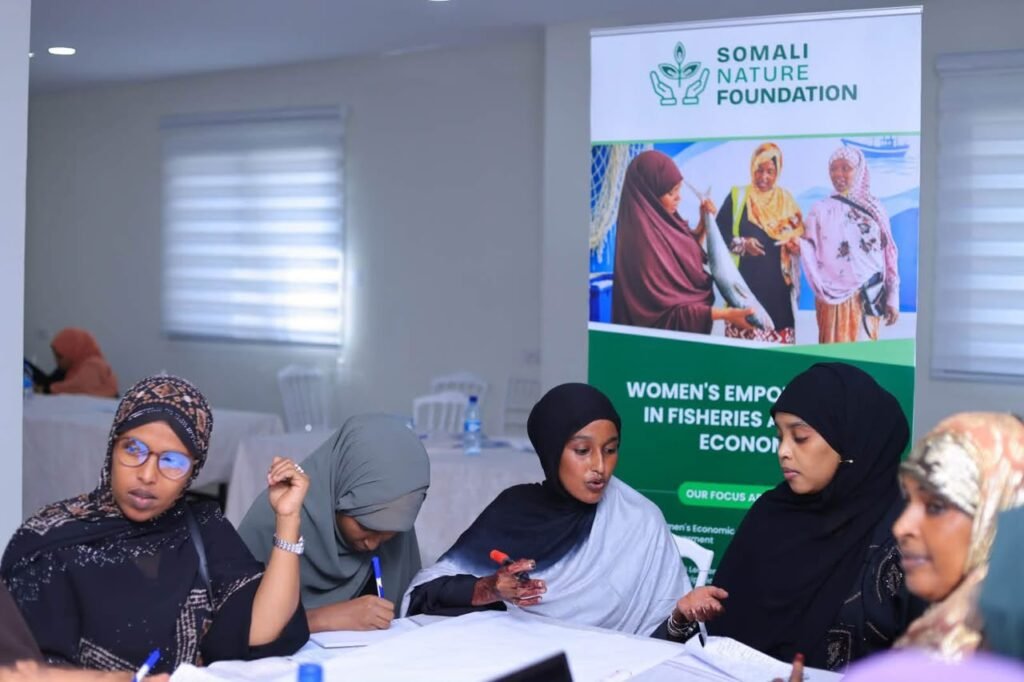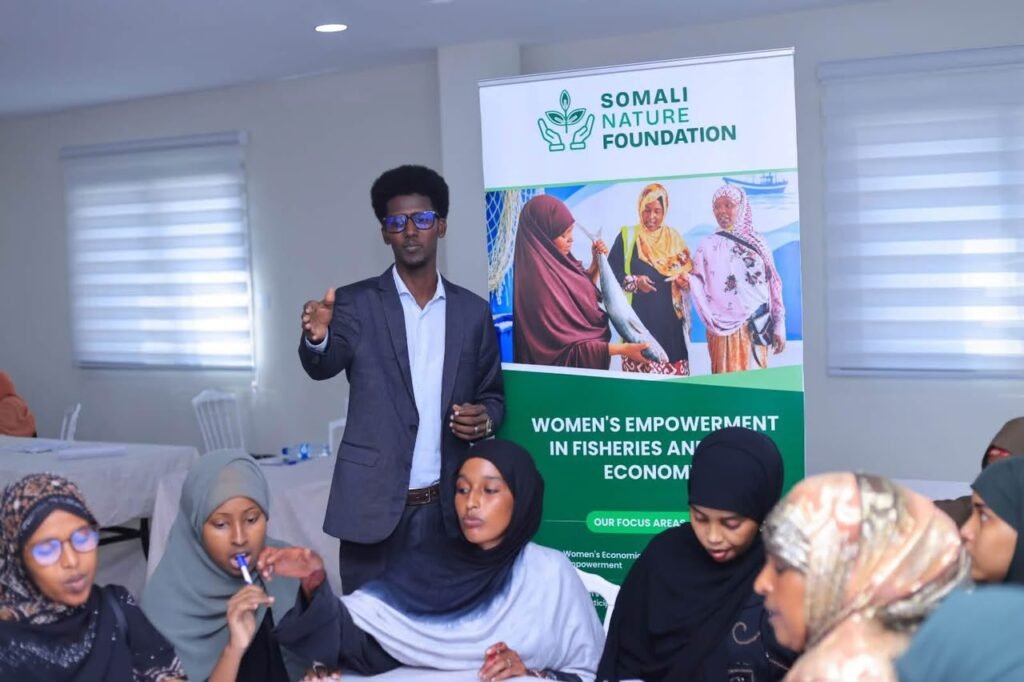
What skills can help a woman turn experience in the fish trade into a stronger business? That question gives practical meaning to one of the themes highlighted at the Somali Nature Foundation’s November 2026 women’s empowerment awareness session in Mogadishu. SONAFO focused attention on the skills and economic opportunities available to women in fisheries and the wider blue economy.
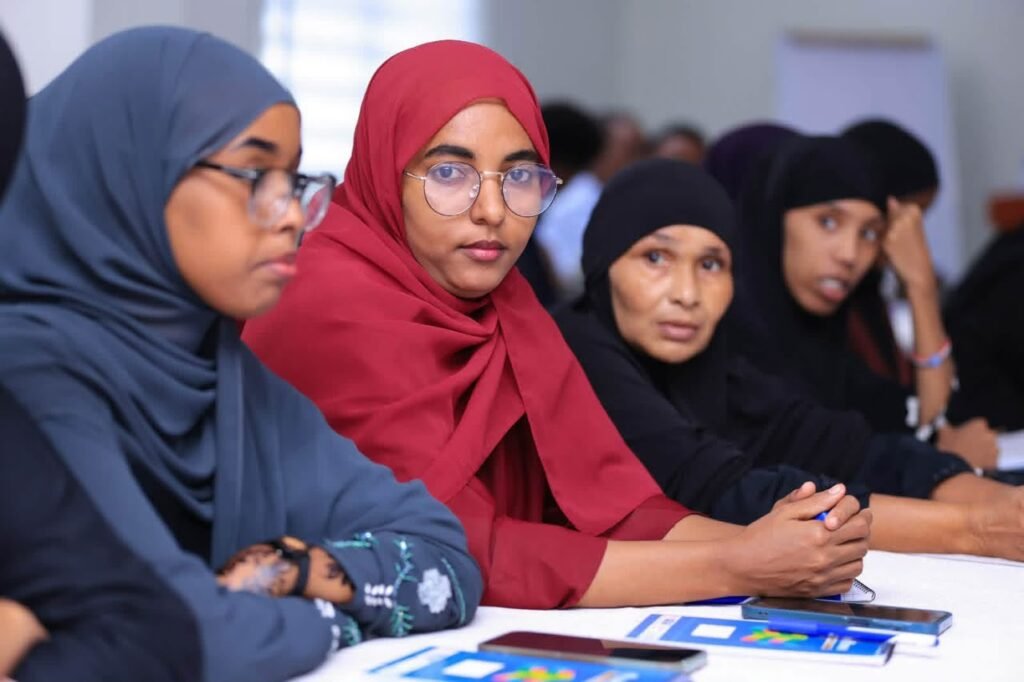
Practical skills for women in Somalia’s fisheries sector
A fish trader who can calculate the cost of buying, transporting, storing, and selling fish is better placed to set a price and judge whether a sale is profitable. Keeping simple records can also help a trader see which products sell reliably and which costs cut into earnings. For processors and sellers, safe handling and storage can help preserve product quality and reduce losses.
Business skills become more useful when women can put them into practice. A trader may know how to handle fish safely and still face limited access to ice, storage, or transport. A processor may be ready to reach more customers but need dependable buyers or suitable packaging. Those everyday challenges show why skills development and access to facilities and markets belong in the same conversation.
Peer networks can help women put skills to work
Women working in the same trade can share information about prices, buyers, and practical ways to reduce costs. Peer networks can also help newer entrepreneurs learn from people with experience in the sector. By highlighting skills at its Mogadishu session, SONAFO drew attention to a concrete part of women’s economic participation in fisheries.